In a couple of brief conversations of late I have been reminded that we all end up with low days (or weeks). The #GBDoc on Thursday 18th June had a question along the same lines and got me answering with how I deal with it only I seemed to put it in a way that is rather more thoughtful than my usual profanity infused gibberish (think the cat might wave walked over the keyboard while I was typing). It came as this:
"When it all gets too much sometimes looking at your feet to see where you are stepping instead of the horizon to see where you are going seems easier. Thing is, you are still heading in roughly the right direction most of the time"
That's the key I think. When it is hard, break it down into what you can actually do right now and do it the best you can. You are still making progress it just doesn't feel that way until you get the energy to look up or someone else who knows roughly how you feel points out to you that you are, actually, still heading in the right direction. The rest will often tend to itself or wait in any case.
Isn't it great to have a community that just gets it?
Thursday, 19 July 2018

Tuesday, 17 July 2018
A pump all of my own - Go Live
The day has come and gone... sort of, and I am now the proud owner of a pump... my pump, not a loan pump from the clinic... this one is mine.. I think I shall call it Bob, until I don't.
Now that it is all my equipment I am less shy about hauling it all out the bag and having a really good look at everything that comes in the box / case. And it's a real snazzy case too (insulin pen for scale):

Continuing with the un-boxing it seems that the manufacturer SOOIL are not messing about, they have crammed almost everything I could think might be even vaguely useful into this case. Some I may use some I definitely will not but here is what it looks like all neat (without the pump... I'm not putting Bob back in the case he will get lonely!)
 By my reckoning that supply around 2 weeks worth of reservoirs in the case no infusion sets though I have boxes of those from the clinic in any case. You also get a handful of batteries and by my count about 6 different pump carriers.
Hauling it all out and laying it on the table gives a better idea of what comes as standard with the DanaRS it seems. Below all laid out with some annotations below of what is what.

Now that it is all my equipment I am less shy about hauling it all out the bag and having a really good look at everything that comes in the box / case. And it's a real snazzy case too (insulin pen for scale):

Continuing with the un-boxing it seems that the manufacturer SOOIL are not messing about, they have crammed almost everything I could think might be even vaguely useful into this case. Some I may use some I definitely will not but here is what it looks like all neat (without the pump... I'm not putting Bob back in the case he will get lonely!)

Hauling it all out and laying it on the table gives a better idea of what comes as standard with the DanaRS it seems. Below all laid out with some annotations below of what is what.

A - Spare Batteries
B - Solid plastic carry case
C - Leather Carry Case
D - Easy Setter (it's a Dana Thing)
E - Spare Scroll Plunger (again, Dana thing)
F - Spare battery and reservoir covers
G - Pump pouch (think this is meant to clip to a bra perhaps)
H - Neat case that had a bunch of the smaller bits in
I - Key for tightening / loosening the battery & reservoir covers
J - Another pouch though this one you wear as an over the shoulder sort of thing
K - Bob!
H - Shower pump pouch (think I'll just take it off)
I - Manuals etc
J - Yet ANOTHER pump holder, this on in a belly band type of rig
K - Micropore tape x 2
L - Mefix tape / patches (never heard of em)
M - Tegaderm patches
N - Spare reservoirs
The above doesn't include the other bag I had which approximately 30 additional reservoirs and infusion sets which have basically filled an entire drawer in my bedside table... so yeah... got loot!
The good & bad
I'm going to do this the other way round and cover off the bad, well I say bad they are more annoyances I guess.
Bad(ish)
Priming is fiddly!
I am not even joking here, there are a bunch of different steps to prime this and get it all up and running again and I think even on a good day I will be talking 10-15 minutes with some properly fiddly steps. Don't believe me, it's close as makes no difference to the DanaR which you can see for yourself here: https://www.youtube.com/watch?v=QQf0Vy_gwnM
To be fair the part where you wind the scroll in is done by the Easy Setter and it doesn't seem all that awkward. I am yet to try and do it all manually.
(EDIT after 6 months) Okay so it's not THAT bad. Once you get your technique down a set change is just over 5 minutes.
(EDIT after 6 months) Okay so it's not THAT bad. Once you get your technique down a set change is just over 5 minutes.
It uses proprietary infusion sets
A minor annoyance since this equipment is not something you can just go and pick up from the pharmacy if you are running short anyway but it is not using any standard connectors. That said they do have a fairly good range of cannualas and tube lengths and the default that I am using is a nice 360 degree spinning affair which is actually pretty comfy.
You can hear the scroll motor run
This is my first ever pump so I do not know if this is standard. I have been wearing the pump tucked into the top pocket of my shirt and I can occasionally hear a high pitch sound of the pump running, it is not loud but I do notice it sometimes though to be completely fair it's not bothered me once in the last week.
It's not possible to download pump data right now
Okay this is more one for the clinics and was actually one thing that nearly stopped my clinic from offering it, thinking it was possibly a little too soon. The reason for this, as best I have been able to divine, is that the phone Apps have not been CE certified yet so the pathway to connect to the pump to pull data is not officially there yet. NOTE: I say officially since this is not as big a deal as you may think and gets covered in one of the GOOD sections.
It uses some proprietary battery
The batteries or a little odd at first though I thought it highly unlikely that a pump manufacturer would go to the expense and effort of inventing their own battery. A very brief search reveals that it's a fairly standard battery with a minor mod. (see: Blog from Bionic Wookie) That said again it's largely academic since you get the replacement batteries as part of your regular supplies from SOOIL.
Good
This sucker is light!
I am not kidding, I dropped it on my kitchen scale complete with 240U of insulin in the reservoir and it maxed out at 73g. Yes I know that the Omnipod is probably lighter and maybe there are a couple of others but for a pump with the features this one has it's quite impressive.
Backlit LCD Screen
This may seem like an odd thing to put in good. "What, old fashioned LCD with no pretty colours?" yup! Why is it good, well easier to do a list:
- It uses a ton less power than colour screens
- It's lighter
- You can read it in bright sunlight (been useful the last week)
- Backlight is not so bright it disturbs your partner if you are making a correction at night
Full bluetooth connectivity
That's right, it seems to always be in discover mode when you wake it up though you have to approve any pairing requests on the pump.
IT JUST WORKS WITH OPENAPS
Yes I saved the best for last. This little pump, from the factory, will happily work with OpenAPS (AndroidAPS to be completely accurate) and does not require any funny tweaks or hacking or firmware. Fully warrantied by the manufacturer you can Loop with it. Of course this added a few other good things.
Remember when I said that it's not currently possible to download this pump for the clinic? Who cares? Once I hooked it up to AndroidAPS EVERYTHING I do ON THE PUMP gets synced back to my nightscout and my clinic can then see it in near real time. I have spent a lot of time talking to my pump educator about this and showing her all the features as well as the reports she can pull and she seemed to think it was cool and gave her everything she needed to be able to monitor and support me. Have I mentioned recently that I think my pump clinic are awesome? No? Okay my pump clinic are AWESOME!
[EDIT] A couple weeks in now and my clinic properly love how AAPS integrates the pump with NS as they can keep an eye on things and offer suggestions over email without having to get me to do an upload first. I think this means that we have managed to get most of my rates nailed down in record time
[EDIT] A couple weeks in now and my clinic properly love how AAPS integrates the pump with NS as they can keep an eye on things and offer suggestions over email without having to get me to do an upload first. I think this means that we have managed to get most of my rates nailed down in record time
Okay so I am having to explain things and teach the educator all about this tech and how everything hangs together but you know what? I'm fine with that #WeAreNotWaiting and it seems my clinic at least is happy to support me and learn from me with this.
Finishing now I promise
I want to make a few things completely clear before I sign off:
- I am not jumping straight in to looping as soon as I am live on a pump. This is silly an irresponsible since I think it is important that you understand all about the tech that is keeping you alive. This includes how to run it by hand when the tech fails (yes, "when"!) so it's important that you know what you are doing and even have a plan for when the pump itself fails. @grumpy_pumper did a guest blog for @RenzaS on just this subject last week(https://diabetogenic.wordpress.com/2018/07/08/wwgd-the-back-up-plan/). Most convenient timing.
- I did a lot of investigation on AndroidAPS and made sure I fully understand what needs to work and how it all hangs together, so I know what to kick when stuff breaks!
- I'm being completely open and honest with my clinic about my intent and what I am doing. At the same time I am making every effort I can to include them so that they can learn and understand what it is that the #WeAreNotWaiting community have achieved. It's very clear to me that we are all working towards the same ends and making "them" and "us" distinctions with our clinics helps no one and only alienates people that genuinely want to help us. They just have different restrictions to work under so bear that in mind.
- Finally the important thing, I'm taking all the tips and leanings I can from other pumpers (not just loopers).
So there you go, that's me 8 hours into pumping and so far no major disasters. Had a near hypo before lunch now just dipped down to 11.5mmol/l (207mg/dl) following lunch, though that is not uncommon. The coming weeks will be interesting and exhausting I am sure but once I am happy I more or less know what I am doing I will start doing what many others have already done and close the loop. #WeAreNotWaiting and currently, a little as a time, neither am I!
Thursday, 12 July 2018
What you don't think to ask
Okay first 24 hours of pumping (saline) are now complete and yet again I cannot the convey just how amazing my pump educator at Addenbrookes has been.
Before I even got back to the office she had already emailed me a bunch of stuff we had discussed and by that time I had also realised a whole bunch of things I forgot to ask.
Several emails to and fro and I had a load more information and had updated my GOTH Plan (GOne to Hell) to include the contact details and processes. Excellent, probably a little overboard but I like to have all the details I may need before I REALLY need them.
All things going well, having pump attached not really an issue. I tried belt clip even though no belt on my shorts which was great except the clip was digging into me (really need to lose some weight) so reverted to tucking in my pocket. This was great until I reached into my pocket to check something on the pump out of curiosity and found that I was tugging at the pipe work which was just annoying more than anything... need to think this one through.
Something that I did kind of do what jot down a few questions I wanted to ask at the clinic and then completely forgot about them (must have been something new and shiny distracting me) and only got a few answered. As it turned out the questions I had noted down to ask were more or less of no consequence as it turned out however a couple of days in I have been helped in equal measure by both the pump clinic and the #GBDoc, sometimes you just can't beat real first person experience talking.
So what are some of the questions I didn't ask at the time but have since and gotten answers for, bold is the ones I will go for:
Before I even got back to the office she had already emailed me a bunch of stuff we had discussed and by that time I had also realised a whole bunch of things I forgot to ask.
Several emails to and fro and I had a load more information and had updated my GOTH Plan (GOne to Hell) to include the contact details and processes. Excellent, probably a little overboard but I like to have all the details I may need before I REALLY need them.
All things going well, having pump attached not really an issue. I tried belt clip even though no belt on my shorts which was great except the clip was digging into me (really need to lose some weight) so reverted to tucking in my pocket. This was great until I reached into my pocket to check something on the pump out of curiosity and found that I was tugging at the pipe work which was just annoying more than anything... need to think this one through.
Something that I did kind of do what jot down a few questions I wanted to ask at the clinic and then completely forgot about them (must have been something new and shiny distracting me) and only got a few answered. As it turned out the questions I had noted down to ask were more or less of no consequence as it turned out however a couple of days in I have been helped in equal measure by both the pump clinic and the #GBDoc, sometimes you just can't beat real first person experience talking.
So what are some of the questions I didn't ask at the time but have since and gotten answers for, bold is the ones I will go for:
- Where do I put the pump when I am taking clothes off and have nothing to clip the pump to? Here is what I tried and what was suggested.
- I tried putting it on the chest of drawers but it fell off when I bent over (only 60cm tube)
- Take it off (DOH!.... At the time it just did not occur to me)
- Hold it under your chin (Good idea but I suck at that trick)
- Drop it on the bed (Might have worked but short tube)
- Do I need to update my letter for airport security?
- Yes, clinic sent over electronic copy and will put a couple printed ones in post too.
- What do I do to order extra consumables?
- This seems to be clinic specific from what I have seen. At my clinic they have it centralised so that they can see who is using what (also some cost savings too apparently) but they did explain that they have found where people needed different cannula purely by seeing that patient X is ordering a lot of them.
- Educator sent over main mailbox for re-orders as well as direct email for person responsible as well as her phone number. (Sweet!)
- Am I okay to order extras when I do not need them to stock up for travel etc?
- Of course (Duh! Still worth checking I thought)
I am under no illusions that this list will grow a LOT since I am still not pumping insulin. I should say that the leaflet that the clinic gave me about what to do on the days leading up to the switch was excellent. Obviously it changes depending on the basal insulin you are taking but they covered off all different ones in use and what to do as well as providing a checklist of what you need to bring along on the day.
I may have said it before but the communication with the pump educator at the clinic has been fantastic. Any question that popped into my head I fired off an email and got a response really quickly. I did wonder if all these random questions would make sense being compiled into a leaflet but to be honest I think I have liked how I could reach out to the clinic as easily and quickly as I have been so that has been a lesson learned there too!
Next steps in order are:
- Unsupervised solo set change (tonight 😲)
- Start pumping the strong stuff (next Tuesday)
So interesting times ahead, this should be fun!
Tuesday, 10 July 2018
Step 1 - Practice with Saline, aka a Soft Start!
Okay day one of being hooked up to a pump and so far so good.
There was a minor bit of drama yesterday when clinic phoned me up because my pump had not arrived yet, luckily since I am running saline for the first week it's actually no major issue with me borrowing the clinic demo pump, so that's what is attached to me now.
I will admit that when I heard that they do the switchover as a 2 step process with the first week done pumping saline I was a little annoyed and impatient. Thinking "well why the hell are we doing that, it's just silly!" On further reflection I realised it's actually a rather sensible way of doing things since you can then "pretend" for the first week while you are still all good with the pens etc so there is nothing life cirtical going on in case you do run into some kind of issue with the new equipment.
The logistics issues that happened further cemented my view that this is actually a really smart was of doing this kind of thing since it gave us that degree of flexibility and I didn't get delayed or anything like that... which is awesome!
So how did we get on, well first off I went with the DanaRS, and it's a cute little pump, supposed to be one of the lightest around too!

One of the major selling points with the DanaRS is that you can run it with an App from your phone, or with AndoirdAPS as it has some open API's to manage it. Well that's what I thought but the AnyDana-A didn't want to see the pump so maybe this is the whole "waiting for CE approval" thing rearing it's ugly head. No worries, I have AndroidAPS installed to I fired that up and connected first time no issue... sweet!
So after running through the things I had learned in the videos for priming the pump, which is a faf compared to many though the AndroidAPS option trumps that, I had everything all primed and confirmed as good by my pump educator. Time to plug in and get started then.
That is where we are up to now, my new (loaner) pump happily sitting doing it's thing and I generate even more data. This is really quite the soft start and hopefully I will be all used to sleeping with this thing attached and then next week the real work starts. Let's see what happens then.
I would like to say that my pump educator Helen was absolutely fantastic and was completely open to looping and was very interested in all aspects of it. We dug through the various parts of my nightscout site and we were both impressed when all of my profile settings just got applied to the pump, super slick!
There was a minor bit of drama yesterday when clinic phoned me up because my pump had not arrived yet, luckily since I am running saline for the first week it's actually no major issue with me borrowing the clinic demo pump, so that's what is attached to me now.
I will admit that when I heard that they do the switchover as a 2 step process with the first week done pumping saline I was a little annoyed and impatient. Thinking "well why the hell are we doing that, it's just silly!" On further reflection I realised it's actually a rather sensible way of doing things since you can then "pretend" for the first week while you are still all good with the pens etc so there is nothing life cirtical going on in case you do run into some kind of issue with the new equipment.
The logistics issues that happened further cemented my view that this is actually a really smart was of doing this kind of thing since it gave us that degree of flexibility and I didn't get delayed or anything like that... which is awesome!
So how did we get on, well first off I went with the DanaRS, and it's a cute little pump, supposed to be one of the lightest around too!

One of the major selling points with the DanaRS is that you can run it with an App from your phone, or with AndoirdAPS as it has some open API's to manage it. Well that's what I thought but the AnyDana-A didn't want to see the pump so maybe this is the whole "waiting for CE approval" thing rearing it's ugly head. No worries, I have AndroidAPS installed to I fired that up and connected first time no issue... sweet!
So after running through the things I had learned in the videos for priming the pump, which is a faf compared to many though the AndroidAPS option trumps that, I had everything all primed and confirmed as good by my pump educator. Time to plug in and get started then.
That is where we are up to now, my new (loaner) pump happily sitting doing it's thing and I generate even more data. This is really quite the soft start and hopefully I will be all used to sleeping with this thing attached and then next week the real work starts. Let's see what happens then.
I would like to say that my pump educator Helen was absolutely fantastic and was completely open to looping and was very interested in all aspects of it. We dug through the various parts of my nightscout site and we were both impressed when all of my profile settings just got applied to the pump, super slick!
Monday, 9 July 2018
What have I done?
There is an old (tongue in cheek) saying in software
engineering, and systems engineering to be honest, that the definition of an
upgrade is “Take the old bugs out, put new bugs in!” It is that situation I
find myself in this evening on the eve of the switch the pumping.
From diagnosis pumps seemed like the nirvana of diabetes
control, even all the people I interacted with after diagnoses (non-D) seemed
to know about it and it came across as the solution to all things. Naturally I
immediately looked into this since learning new shit is something I seem to
like. Even though these days it feels like the more I learn the more I forget.
One thing I realised very quickly on my own was that all pumps were, is a more
finely tuned version of what I was doing (MDI) min many ways.
I ruler is a great device for measuring something if all
your care about is close enough to the nearest millimetre. A micro meter is stunningly
amazing at getting to a thousandth of a mm if you care about it but there is
the thing. You have to care and you have to want o do something with that
ability. Having a 200mph Ferrari is great but it’s a complete waste of time if
you are going to pootle down to the shops for your weekly shop once a week.
It is all about the right tool for the job and the person
using them having the skills and desire to use those tools to their best
effect. I think many T1’s have certainly got the desire though I wonder if the
knowledge to make the most of these finely tuned F1 cars of the diabetes world
is there at the start? I guess when I come out of clinic tomorrow I may have a
more informed opinion on that but right now, a mere 12 hours before I am to
make the switch I find that I am filled with questions and self doubt.
What they hell have I done? I have managed 9 years with no
major incidents, no DKA (there were some close calls) no major hypo incidents
(no official records so they NEVER happened) and yet I am changing to a
completely different formula. I know how to do what I do now with the tools
that I have now and I do a pretty good job of it. Why have I chosen to throw
all that out the window and start from zero all over again… I must be crazy.
It seems to me that self-doubt is possibly a constant
companion of us as humans, though one that carries a whole load of extra
baggage as a PWD. We doubt our maths, we doubt our treatment decisions. We
doubt almost every single treatment we give ourselves and then worry that we
maybe didn’t record what we actually did or we recorded but didn’t do it. The
anxiety in worrying if you did in fact give your basal shot and at the correct
level. Did you use the correct ratio? The distraction as you monitor your
sugars to see if you did do what you think you did or not? It really is
exhausting.
I tell myself that is the biggest things that I am giving
myself with pumping. I have that second check, I have the machinery to just do
the “normal” background stuff so I don’t screw it up (AGAIN!) but then my
overactive mind worries about the next thing. What if it fails?
The pen failures I have nailed, I know them all.. I’ve seen
them all and can spot them fast and fix them. This pump stuff is so new I have
no clue. No baseline, no indicators no nothing. How do a fail back? My various
professional lives have always had a strong element of risk management.
Identify the things that can fail, document and train for the really bad things
and PRACTICE.
Well, these evening I feel like I well and truly screwed
myself since I have no clue about the possible failures or emergencies and I
will need to guess. I will need to rely on my own gut instinct… the trouble is
I am naturally distrusting of my own gut instinct since I have a habit of
screwing things up in interesting and spectacular ways. Where my health is
concerned that leads to a degree of anxiety.
Is it simply nerves due to change for the unknown, probably.
The problem is that the human mind, rational as it may be most of the time,
tends to be completely irrational. So please forgive me.. I am having night
before pump start jittters and hopefully tomorrow it will all go out the window
and life will be all sweetness rum (or gin if that is your preference).
In any case, the future is looking at being rather
interesting (I seem to recall an ancient curse along those lines) though I hope
and expect with the help of the brilliant DSN’s at the clinic and the amazing
friends I have in the #GBDoc I will find a way through this and settle in
nicely.
For now I guess I will just try to remember not to be too
hard on myself in the new world and learn all I can as fast as I can.
Thanks for reading my rambling drivel dear reader!
Wednesday, 27 June 2018
It's really not "Them and Us"
This last
few weeks has set me thinking about a few things. I did some training at work
around Growth Mindset that opened my eyes to some behaviours that I realise are
not only not good but completely counter productive and ultimately destructive.
The depressing thing is that I noticed many traits in myself and so I began to
make a conscious effort to challenge myself. Challenging others has never been
an issue for me but there is one of the issues in itself.
Earlier this week @ParthaKar posted
yet another thought provoking blog about diets and shaming
(http://nhssugardoc.blogspot.com/2018/06/diets-and-shaming.html) well not
exactly. I have a tendency which is sometimes good sometimes bad of condensing
things I read down into a simple message that I can absorb and take to heart.
What I took from his blog was this "Don't be a dick, accept others for
their skills and their passion and respect them and their opinions as you would have them respect
you". I apologise to Partha without reservation if I completely missed the
mark but that is what I took away from that post. It did however set me
thinking on something larger that had been floating around my mind for a while
in any case and I will try to put that across here, though likely not very well
since I am a marginally okay engineer and not a wordsmith.
I'm going to focus on diabetes
care, since this is an area I have a strong vested interest, though I think
that what I am trying to put across can maybe be expanded to many other areas.
I tend to have untidy and messy thinking that way.
Since I was dropped into this world
there have been things that struck me, some of it language, some of it attitude
and others.. well I really can't describe it. The #LanguageMatters tag goes a
long ways towards crystallising it. While we say that it is Language that
matters I think the key thing to realise is that language is a manifestation of
thoughts. It is the thoughts that are behind the language that we are trying to
get at. Since directly altering thought is tricky, not to mention messy and
possibly illegal, lets stick with language since it turns out to be a two way
street. While thought dictates language so language has a way to guide and
inform thought. Yes us humans really are quite a confused mess even if we think
we are above such things.
The greater thrust of the
#LanguageMatters movement is focused on getting HCP's to treat us PWD's like
people and talk to us as such. Telling us we are "non-compliant" or
"failing to meet targets" or "getting bad numbers" has many
many poor connotations. I should say that I wholeheartedly agree with the
movement and where they are trying to take things. I think in the early days of
my diagnosis getting more encouragement and praise for the good I had done and
help where I was falling short of the desired targets would have helped a lot.
The scare stories did nothing but demotivate me and leave me with a feeling of
"why bothers I'm screwed in a few years anyway".
Though as I said before us humans
are a messy and disorganised bunch, so I got to thinking that maybe
#LanguageMatters works the other way too?
I mean think about it. In an ideal
world, you would walk into your annual review, get praise for all the things
you improved on then be asked what could be done to help improve where things
were not so good. You would then ask for all the latest toys, widgets, tech,
drugs, magic "cure" and your Dr would absolutely hand over everything
you asked for and 100% support every single bit of it. Awesome right? But the
world is all about balance and compromise so you don't get that. You have to
muddle through with a sub-optimal set of tools and your poor Dr has to try and
support you the best he/she can. When I started to think in this was I cast my
mind back to some of my past interactions with HCP's and realised what a prize
as*&£e I had been on those interactions. they were fighting the same fight
that I was trying to fight but they had their hands tied by policy, guidance or
budget restrictions.
Yes the latest great diet idea may
work but the risks haven't been fully assessed so it cannot be broadly
supported. Well hey, guess what... you as the PWD actually has a huge amount of
control over what you can do with the tools you have, free will is great that
way! I'm not condoning full on wild-west but if you have the tools and skills
to try something different and understand the risks, by all means try it. Feed
it back to your Dr / DSN they will likely be as interested as you. But remember
they are judged by a different set of standards and rules to you. This can have far reaching consequences to their life and chosen profession. So that's another consideration.
You are looking after you and only
you, (unless you are a parent or carer obviously) while they have a larger
target to be concerned with and they have measures and kpi's that they are
judged on. You may feel like crap when you have worked yourself silly
and gotten your A1c from 8% to 7% (which IS great work BTW) but your Dr/DSN
will have to look at this and assess the risk while also being really happy
that you are making their clinic look awesome. Yes you have done great but if
you are having loads of hypos that scares them! I know that I have gotten blasé
about hypos but that is just what I have learned to live with. The thing is
that your HCP is looking at your achievements through a whole host of other
targets and guidelines and filters that they need to consider as well as not
necessarily fully understanding how smart you are at doing your calculations ot
how good you feel your hypos. It's an imperfect system but that is how the
world is.
The thing in all of this (yes I
ramble on) is that they are looking out for your best interests in the best way
they can with the tools they are able to provide to you. And that I think
is where I am trying to go in this, we all want the best tools and HCPs would
love to give us the best tools... that will make their lives simpler in some
ways and a complicated mess in others, but if it helps us then I have no doubt
they will do their utmost to accommodate us. And that's the thing... I say
#LanguageMatters and yet even through all of this ramble I have spouted
"them" and "us"! We are a team but we get these lines and
constructs drawn between us all!
Oh those people haven’t done DAFNE,
oh they are on MDI while these people are on Pumps. These are the HCP's that
have T1 while they are the "Healthy" HCP's. It's all, for the most
part, artificial constructs that we have drawn up to break ourselves into separate
tribes when in reality we are all out for the same ends. Granted some are at
the bleeding edge, bleeding while others are trying to hold the shields and
stem the flow as best they can. We're all on the same side and I think as soon
as we can all start to see that #LanguageMatters from all apparent sides the
better we will all do at fighting the fight that matters.
I will be doing my best to
talk to my HCPs as equals as best I can and try to encourage the same in reply.
In essence I will try to have an open and human conversation where we share knowledge,
tools and strategies on dealing with a common enemy. I will fail at times I am
sure but I would like to hope that the effort will be appreciated. As soon as
all of us, PWD and HCP of all disciplines and treatment opinions can start to
treat each other with respect and dignity and realise that while we may have
different views and opinions on how to fight the battle we are all still
fighting the same war but on different fronts, and what works one place may not
another.
This whole them and us, be that
HCP's vs PWD, Pumpers vs MDI, Finger stick vs CGM, Libre vs CCG (okay that last
one I may relent since I still get antsy when arguing with budget vs clinical
outcome types) it really all doesn't matter. It is not an excuse for us to be a
dick with the person in front of us that really wants to help or meet their
treatment targets. We all of us are fighting a small battle that is part of the
same greater war and we will not win if we are too busy fighting with each
other.
Okay.. done... silly long ramble
finished... I'll just leave it here for now and hope that I made some of you
take a breath and think about "the other person" in your particular
T1d relationship.
Sunday, 25 February 2018
Try, try again
Welcome back where this time round in the "Andy quits being a lazy slob and starts to get active" I will be looking ot how things went the second time round with lessons I applied from last time.
So let's do a quick recap on what I learned last time, first off the good:
 As I said, it kind of went wrong from lunch time so lets look at that.
BG before lunch was 12 and I was eating 24g of carbs. So I went with my normal 1:1 ratio to give me 2.5UI and then I did a "gentle correction" of 2.5UI aiming to bring me down to around 7mmol/l (1UI drops my bloods 2mmol/l approx)
As you can see that dropped me to 5.7 an hour or so later which seems amazing, for me this is too good since it takes more than 2.5 hours for me to return after a meal. Then at around 17:30 I had an early dinner as was hypo. So clearly my lunch ratio was off or maybe I should NOT have corrected.. okay thats 1 point.
So dinner was fairly carb heavy at 100g, normally evening ratio is 2UI:1CP but due to hypo and the guess that I was still dropping (No Libre or CGM so I have a scalal value not a vector... it's a pain!)
A couple hours later I am hypo AGAIN!
Then we see a pattern where I keep throwing carbs on top but pretty much remain hypo the whole time.
I should mention that I do not really follow the standard guidelines of 15g carbs and then more. I calculate what I need to eat and it usually serves me well... usually.
What makes this a little complicated to work out is that I did not return to a "good" number before bed so it is difficult to tell the difference between where the bolus ended and the basal becomes the dominant factor in all of this.
BG between dinner and 21:30 (when I take basal) remains about the same so lets say that I had 120gC and that 17UI kept me stable. That means my ratio was about 1.4UI:1CP for that... so we will take that forward for next time.
 pretty... I'm fairly sure that my specialist will have a fit tomorrow at my annual review but I'm still here so clearly not totally unsafe!
Between 21:30 and 8am I was up to deal with hypos a few times. Total additional carbs before breakfast was 25g. Going with on the assumption of 1:10 I will say that I needed at least 3 units less than I took. So I took 16 which means 13UI basal. To complicate matters my night time basal is changing anyway (reducing) so that makes it trickier.
Looking back at my logs from last year it seems to be a year on year trend that as the days get lighter my night time basal drops off, recent night time hypos or low morning seem to back this up so I will go with 12UI next time I think.

to correct at some point.
Morning started off a little high so I did a small correction since I didn't want to start too high as I figured that would make me feel rubbish.
Levels during the run remained pretty stable again with the small correction I put on (3.5 Units, aiming for about 7mmol) meant I was on target when I finished by 9:48 with 7.8.
Something which did surprise me (even though I didn't notice it last week and it was there) was the rise an hour and a bit afterwards... that's the 17.1 here.
Lunch time came around and I was 12.3, again I was really missing the vector value since I had no idea how fast my sugars were dropping.
Lunch was something yummy (and spicy) from Nandos as we had to go run some errands. I decided that I would dose normally and just ignore the correction since I guessed it was dropping on its own.

Well that sort of worked. By dinner time I have been running high but still in single figures though I think the reduced basal is running low either that or I need more basal and less at lunch... not sure which to go on that one, will have to mull it over some more.
So dinner time and I go with the reduced ratio and add a correction to bring me towards 5 before evening basal.
So basal time and I am running at 4.5 (again... no clue which way it's going) so go with basal of 12UI (last week was 18UI) an almost straight away I hypo to 3.8.
Working on the assumption that this was left over bolus I did a small correction of 5g which should kick me to around 5mmol/l by morning.
It's no morning and I woke up after a nights sleep uninterrupted by hypos and my test came back at 5.7mmol, I will take that as a morning reading any day you care to name thank you.
The key thing I have achieved is that I can now say that with the changes this week I can now do this exercise safely, only 1 hypo this time compared to 6 last time around. I haven't got this dialled in fully by any measure but I am defininitely further forward than I was before and I now have more datapoints to work from.
I have ordered up a Libre sensor to give me a little more data even though I know my skin will react but I just need the data. So let's build a bigger dataset to work from and move from there.
So let's do a quick recap on what I learned last time, first off the good:
- Delaying my morning basal shot until after the run and then doing a stepped reduction in basal based on time seemed to work well.
- Sugars were nice and stable during the run
- Correcting at lunch to bring my sugars down caused a bunch of hypos.
- My dinner time ratio was clearly a bad idea as that too caused hypos
- Night time basal was way out caused me to hypo all night, so not a lot of sleep there.
What needs to change?
Before I started in the morning I had a really good look through the previous weeks data to try and work out what I would do, I will try to run you through it so you can see my thinking though I should put the caveat on the front of this that you should NOT treat this as a guide as your diabetes may vary.
BG before lunch was 12 and I was eating 24g of carbs. So I went with my normal 1:1 ratio to give me 2.5UI and then I did a "gentle correction" of 2.5UI aiming to bring me down to around 7mmol/l (1UI drops my bloods 2mmol/l approx)
As you can see that dropped me to 5.7 an hour or so later which seems amazing, for me this is too good since it takes more than 2.5 hours for me to return after a meal. Then at around 17:30 I had an early dinner as was hypo. So clearly my lunch ratio was off or maybe I should NOT have corrected.. okay thats 1 point.
So dinner was fairly carb heavy at 100g, normally evening ratio is 2UI:1CP but due to hypo and the guess that I was still dropping (No Libre or CGM so I have a scalal value not a vector... it's a pain!)
A couple hours later I am hypo AGAIN!
Then we see a pattern where I keep throwing carbs on top but pretty much remain hypo the whole time.
I should mention that I do not really follow the standard guidelines of 15g carbs and then more. I calculate what I need to eat and it usually serves me well... usually.
What makes this a little complicated to work out is that I did not return to a "good" number before bed so it is difficult to tell the difference between where the bolus ended and the basal becomes the dominant factor in all of this.
Bolus first
Since this is all one big experiment I will simplify things and make some assumptions to test.BG between dinner and 21:30 (when I take basal) remains about the same so lets say that I had 120gC and that 17UI kept me stable. That means my ratio was about 1.4UI:1CP for that... so we will take that forward for next time.
Basal baby
To show you the whole story I need to add an extra view of last times overnight BG's and they are not
Between 21:30 and 8am I was up to deal with hypos a few times. Total additional carbs before breakfast was 25g. Going with on the assumption of 1:10 I will say that I needed at least 3 units less than I took. So I took 16 which means 13UI basal. To complicate matters my night time basal is changing anyway (reducing) so that makes it trickier.
Looking back at my logs from last year it seems to be a year on year trend that as the days get lighter my night time basal drops off, recent night time hypos or low morning seem to back this up so I will go with 12UI next time I think.
And again
I've gone on an aweful lot looking at last time however since I cannot see the future I have to look at the past and try to build a predicitive model from previous data (look at me sounding all sciencey) so this is what I intend to try this time around:- Back off morning basal and inject after the run since it worked last time
- Make a judgement call about lunch of either reducing ratio (currently 1UI : 1CP so not sure) or do not correct.
- Reduce dinner time bolus ratio from 2UI:1 to 1.5UI:1.
- Reduce evening basal to 12UI
How did it all work out then?
To be honest, better that I expected. I had thought that I would spend a lot more time hyper and have
to correct at some point.
Morning started off a little high so I did a small correction since I didn't want to start too high as I figured that would make me feel rubbish.
Levels during the run remained pretty stable again with the small correction I put on (3.5 Units, aiming for about 7mmol) meant I was on target when I finished by 9:48 with 7.8.
Something which did surprise me (even though I didn't notice it last week and it was there) was the rise an hour and a bit afterwards... that's the 17.1 here.
Lunch time came around and I was 12.3, again I was really missing the vector value since I had no idea how fast my sugars were dropping.
Lunch was something yummy (and spicy) from Nandos as we had to go run some errands. I decided that I would dose normally and just ignore the correction since I guessed it was dropping on its own.

Well that sort of worked. By dinner time I have been running high but still in single figures though I think the reduced basal is running low either that or I need more basal and less at lunch... not sure which to go on that one, will have to mull it over some more.
So dinner time and I go with the reduced ratio and add a correction to bring me towards 5 before evening basal.
So basal time and I am running at 4.5 (again... no clue which way it's going) so go with basal of 12UI (last week was 18UI) an almost straight away I hypo to 3.8.
Working on the assumption that this was left over bolus I did a small correction of 5g which should kick me to around 5mmol/l by morning.
It's no morning and I woke up after a nights sleep uninterrupted by hypos and my test came back at 5.7mmol, I will take that as a morning reading any day you care to name thank you.
Where do I stand now?
Well I improved my parkrun time by 7 minutes which sounds amazing, well I guess sit is since I only expected to gain 2-3 but I have now gone from bloody slow to just merely slow now however that's the bonus and I still have more to do.The key thing I have achieved is that I can now say that with the changes this week I can now do this exercise safely, only 1 hypo this time compared to 6 last time around. I haven't got this dialled in fully by any measure but I am defininitely further forward than I was before and I now have more datapoints to work from.
What next?
I think for now I want to do a few more weeks following this exactly pattern to build up more data. The big reason for making a load of changes compared to last week is that it just was not safe to leave things that way. Now that I am safer I can let things settle a little so I have more information to inform decisions for the further adjustments.I have ordered up a Libre sensor to give me a little more data even though I know my skin will react but I just need the data. So let's build a bigger dataset to work from and move from there.
Monday, 19 February 2018
Get moving
Okay so I finally did it. After many years of being a lazy git I made the decision to start getting more active and try to be a bit fitter and healthier.
It seemed to me that it is relatively straightforward on the surface of things, you need to:
The food side was fairly straightforward, as a T1 I am already very aware of anything that goes down my throat, to the point of it technically being an eating disorder if you go by the letter of the description, that making a few small adjustments was no major thing. The keeping on doing something forever, uhm... T1, I know how to do stuff forever even if I don't really like it.
So I'm already more than half way there... this stuff is easy! Well.....no!
The last time I hit the gym was probably 7 years ago and one of the reasons I stopped was that I just could not get around the crash of blood sugars, combine that with the fact that when I exercise I pretty much lose ALL hypo symptoms. Well, not completely true. While active I cannot feel anything coming on, when I pause between activities then I feel like I am having most of the symptoms so my body is being very unhelpful at both times.
You could I suppose, though you would spend all your time chasing your BG's and likely feel like rubbish a lot of the time, call me strange but that doesn't seem like a sensible approach to keep you motivated enough to do step 3 above!
So what can you do? Well I pulled my logs from years ago when I was still going to the gym (yes I still have them stored on my computer and backed up online) so that was easy for me.
It seems that the way I used to handle activity back then was one of a few ways:
Oddly enough based on the notes it seems that the last outcome there was actually in the majority, though it didn't feel like that at the time. Funny how you see things differently when you actually go and look at the data after the fact.
It's completely obvious that this not a completely insurmountable challange since others are managing it, however there is the little issue of #YDMV (Your Diabetes May Vary). What works for one might not for another and all... this T1 thing is complicated, annoying and completely inconsistent.... it's a wonder any of us are still sane. Errr... moving on!
Trying to see what others were doing was obviously a sensible idea, fortunately my diabuddy @Type1Bri started doing exactly this and since he has such a wonder set of links and experience on his site I started there bounced around reading a bunch there and stuff he linked to in order to work out a strategy.
I generally do not eat breakfast (whole other story from even longer ago than T1) and am only a little bit over weight.
ParkRun seemed like a good way to start all this since it's all well organised and I can make the organisers aware of any issues I may have so from that point of view it's all pretty safe.
Being on MDI makes changing your basal almost impossible, note I say ALMOST. Once it's in it's in so then it IS impossible. However, parkrun takes place in the morning a couple hours after I would normally get up and finishes around an hour later so call it 3 hours.
My first thought was this:

So the day did not start well with a 2.8 at waking but no worry I can still work with this and I am determined to do so.
Before leaving the house I am up to 6.7, so getting better and this is mostly expected as I tend to see a rise not long after getting up.
By the time I am about to start at 08:43 things are looking better and I know that I have no basal onboard so for the next two hours I should, if I do nothing, see a rise of 4-5mmol, this is what I am giving myself.
I should point out that I did NOT run this course but did a very brisk walk and then ran a good chunk of the final lap.
at 9:32 I am half way and stopped to do a test (annoyingly this added at least 30 seconds to me time) but 6.3, I can work with that.
Remember, no real hypo awareness when exercising.
09:56, all finished an wandered off to grab a brew and sitting nicely at 7.5. Not too shabby, this is where I took my basal and reduced it down by 4 units (usually 18).
The support and advice were huge for me and did make me adjust what I was going to do for the rest of the day, though as you will see probably not enough. But it's all a giant experiment and the key thing is I got DATA! I do still want to say a big thank you to Thank you also to @Type1Bri, @Fractis, @PlatinumB2 and @flipper1 for the encouragement.. much appreciated ladies and gents!
So the eagle eyed amoung you will have spotted the graph at the top of the picture which shows me going hypo around 6pm, it didn't get a lot better after that. I was high for lunch so was planning a correction. @Type1Bri helpfully warned me that I would need to likely back off my ratio. What I did was half a unit of my calculated bolus and then took an extra unit out of the correction. Wouldn't you know it that was not far off, around 4pm I was at 5.7.
Then it all went to the gutter for the next 16 hours or so:

I dropped to just below 3 and was fighting it until around 8am the following morning so it was not the most restful nights sleep ever.
During that time I had to take about another 60g of carbs to try and deal with the hypos, so clearly I did something wrong!
Here is the important thing:
NONE OF THIS IS BAD! IT'S ALL NUMBERS AND I INTEND TO DO SOMETHING GOOD WITH EM!
Drop evening bolus ratio to 1.5UI to 10GC.
Drop my night time basal by 4UI to 14U.
Will this work? I have no idea, I doubt it will make things worse but the point is that it is all an experiment. Everything right now is successful (no bad numbers) for a few important reasons:
As always, the cool thing about the online diabetes community is there are a load of people out there who will just get you. Many will be going through or will have experienced something similar and will always be happy to help and offer encouragement. So take that first step, it doesn't need to be fast but it still puts you one step closer to where you want to be than you were yesterday!
It seemed to me that it is relatively straightforward on the surface of things, you need to:
- Eat healthily and sensible portions
- Get more physical activity in
- Keep doing the above forever
The food side was fairly straightforward, as a T1 I am already very aware of anything that goes down my throat, to the point of it technically being an eating disorder if you go by the letter of the description, that making a few small adjustments was no major thing. The keeping on doing something forever, uhm... T1, I know how to do stuff forever even if I don't really like it.
So I'm already more than half way there... this stuff is easy! Well.....no!
The last time I hit the gym was probably 7 years ago and one of the reasons I stopped was that I just could not get around the crash of blood sugars, combine that with the fact that when I exercise I pretty much lose ALL hypo symptoms. Well, not completely true. While active I cannot feel anything coming on, when I pause between activities then I feel like I am having most of the symptoms so my body is being very unhelpful at both times.
My kingdom for a flat line
Well that's the crux of the problem identified and the thing is again on the surface it should be easy to manage. Test sugars lots and deal with it.You could I suppose, though you would spend all your time chasing your BG's and likely feel like rubbish a lot of the time, call me strange but that doesn't seem like a sensible approach to keep you motivated enough to do step 3 above!
So what can you do? Well I pulled my logs from years ago when I was still going to the gym (yes I still have them stored on my computer and backed up online) so that was easy for me.
It seems that the way I used to handle activity back then was one of a few ways:
- Eat before the gym, short bolus and then go.
- Take plenty of snacks with me and eat between activities
- Short bolus at lunch (gym after work) and run high all afternoon.
- Massive hypo after coming off the treadmill (1st activity) and had to scrub the rest of the session
- Activity made me bring dinner up (my notes were a bit more course) so then had panic about not having enough carb in me anymore and so ditched the rest of the session.
- Felt so rotten all afternoon that I didn't feel well enough for the gym.
- Everything went well and gym was fine
Oddly enough based on the notes it seems that the last outcome there was actually in the majority, though it didn't feel like that at the time. Funny how you see things differently when you actually go and look at the data after the fact.
My plans weren't great, what next.
So clearly my original methods were not a great success, obviously more than I thought at the time, so a different approach is needed.It's completely obvious that this not a completely insurmountable challange since others are managing it, however there is the little issue of #YDMV (Your Diabetes May Vary). What works for one might not for another and all... this T1 thing is complicated, annoying and completely inconsistent.... it's a wonder any of us are still sane. Errr... moving on!
Trying to see what others were doing was obviously a sensible idea, fortunately my diabuddy @Type1Bri started doing exactly this and since he has such a wonder set of links and experience on his site I started there bounced around reading a bunch there and stuff he linked to in order to work out a strategy.
It's basically a navigation exercise
What is the idiot on about now you are probably wondering. I thought we were talking T1 and exercise. Well yes but the principal is similar, please bear with me here. For navigation you need to know a few things:- Where am I now?
- Where do I want to get to?
- What routes can I take to get there?
- Do I need anything special to travel any of the chosen paths?
Where am I now?
Ignoring the unfit part, I T1 on MDI taking Levemir for Basal Morning and Night with varying bolus ratios throughout the day wth blood testing done with old fashioned finger prick testing since I get a sever reaction to the FreeSyle Libre. This is a shame since I loved the Libre and wish I could use it. For now I hold out hope that the SugarBeat drops in the next couple of months.I generally do not eat breakfast (whole other story from even longer ago than T1) and am only a little bit over weight.
Where do I want to get to?
I would like to get rid of the excess weight and be able to happily run 10k in something approaching on hour without feeling like I am about to die.What routes can I take to get there?
Well this is where the hard work starts since there no short cuts unfortunately my maps are all a bit faded. What this means is I will need to do a LOT of experimenting and take things fairly slow to start with.ParkRun seemed like a good way to start all this since it's all well organised and I can make the organisers aware of any issues I may have so from that point of view it's all pretty safe.
How did it go?
Yes I know I missed point 4... Well I didn't but it got crazy long and wildly off topic so I cut that and will maybe push it into a different post in future.Being on MDI makes changing your basal almost impossible, note I say ALMOST. Once it's in it's in so then it IS impossible. However, parkrun takes place in the morning a couple hours after I would normally get up and finishes around an hour later so call it 3 hours.
My first thought was this:
- Don't take my basal when I get up
- Do parkrun
- Calculate an equivalent hourly rate and deduct that from a basal shot to be taken AFTER the run.

So the day did not start well with a 2.8 at waking but no worry I can still work with this and I am determined to do so.
Before leaving the house I am up to 6.7, so getting better and this is mostly expected as I tend to see a rise not long after getting up.
By the time I am about to start at 08:43 things are looking better and I know that I have no basal onboard so for the next two hours I should, if I do nothing, see a rise of 4-5mmol, this is what I am giving myself.
I should point out that I did NOT run this course but did a very brisk walk and then ran a good chunk of the final lap.
at 9:32 I am half way and stopped to do a test (annoyingly this added at least 30 seconds to me time) but 6.3, I can work with that.
Remember, no real hypo awareness when exercising.
09:56, all finished an wandered off to grab a brew and sitting nicely at 7.5. Not too shabby, this is where I took my basal and reduced it down by 4 units (usually 18).
Peer support.
This is something that I have blogged about before, it really is all about the people that get you so I want to send a huge thank you for the messages of encouragement from the #GBDOC. Thank you also for the advice and warnings of what to look out for over the rest of the day.The support and advice were huge for me and did make me adjust what I was going to do for the rest of the day, though as you will see probably not enough. But it's all a giant experiment and the key thing is I got DATA! I do still want to say a big thank you to Thank you also to @Type1Bri, @Fractis, @PlatinumB2 and @flipper1 for the encouragement.. much appreciated ladies and gents!
So the eagle eyed amoung you will have spotted the graph at the top of the picture which shows me going hypo around 6pm, it didn't get a lot better after that. I was high for lunch so was planning a correction. @Type1Bri helpfully warned me that I would need to likely back off my ratio. What I did was half a unit of my calculated bolus and then took an extra unit out of the correction. Wouldn't you know it that was not far off, around 4pm I was at 5.7.
Then it all went to the gutter for the next 16 hours or so:

I dropped to just below 3 and was fighting it until around 8am the following morning so it was not the most restful nights sleep ever.
During that time I had to take about another 60g of carbs to try and deal with the hypos, so clearly I did something wrong!
Here is the important thing:
NONE OF THIS IS BAD! IT'S ALL NUMBERS AND I INTEND TO DO SOMETHING GOOD WITH EM!
What next?
Well clearly I need to do something about the drop ~ 10 hours after the event and also over night. I guess my liver is sucking up the sugars overnight so I am looking at something like this moving forward.Drop evening bolus ratio to 1.5UI to 10GC.
Drop my night time basal by 4UI to 14U.
Will this work? I have no idea, I doubt it will make things worse but the point is that it is all an experiment. Everything right now is successful (no bad numbers) for a few important reasons:
- I didn't hypo so bad I needed any help
- I got a ton of data from it all.
- I have a plan for what I will do next week.
- I actually did something!
As always, the cool thing about the online diabetes community is there are a load of people out there who will just get you. Many will be going through or will have experienced something similar and will always be happy to help and offer encouragement. So take that first step, it doesn't need to be fast but it still puts you one step closer to where you want to be than you were yesterday!
Friday, 14 July 2017
Make sure to check your feet
Yup, still there. I mean what the hell did that even mean?
Let me rewind a little bit and try to explain a little, because looking back on this singular comment that was in among the various things I was told leading up to my discharge for hospital. I think it stuck with me because it put me very much in mind of Billy Connolly and the "where did you loose it" sketch. Yup feet, still there and I'm watching out for those unhinged nut job surgeons who want to nick em. With a possible alternative of "Oh my god I walked on the grass out in the back garden so now I might lose my feet" depending on mental state and mood.
I suspect that I am still no closer to enlightening you my poor confused audience, though to be honest if you are even part way there you are well ahead of me... save me a spot at the bar if you don't mind.
First off my first night in hospital was absolute bliss. No really! I mean yes I had part of a domestic plumbing network attached to my arm, I was still mentally dealing with the news and really wanted to be anywhere but stuck in hospital... those places are full of sick people!
The reason why my first night in hospital was bliss was because I slept through the whole night... well mostly. The nurses only actually woke me up twice doing my BG tests. Given that they did at least 6 I have to salute those lovely ladies and gent since they clearly had some scary ninja skills.
But that was the key, I actually stayed in bed and when I woke up I wasn't still completely tired.... like I said bliss!
About the last thing I was told as I was discharged was something along the lines of "Your doses are 12U Lantus, then 8U of Novorapid for each meal. Keep your BG between 5 and 8 and be sure to check your feet!"
Bear in mind at this stage I had completely had my fill of being in hospital so I simply agreed and ran for the door, partly because I don't like being in hospital and partly because I was getting a little depressed with some of the scare stories and lectures I was being given.
You know the ones I mean... you have just been diagnosed so now they are going to scare the crap out of you.
In summary, here are the complications you need to be on the look out for:
Hold up a moment there... I just got diagnosed and you are telling me I am basically f****d!
My mental state was already what could charitably be called delicate and I was stuck on a ward with people who already have all of the above and are in for surgery to remove this that or the other and you give me these lectures.
So that is all the "let's scare the crap out of Andy" bit. Is it any wonder I forgot half of it and ran for the door at the first opportunity?
What should happen for someone that has just been diagnosed and is still in the system?
My feeling is that the first weeks and months are key to being able to mould a "good person with diabetes"
So how do I think it should be approached?
The individual will at least be able to keep a log of their BG and have a basic food diary so hopefully this is a good start for the DSN to start doing adjustments. Additionally they will know what to do for a hypo and so they will be nominally safe in the weeks afterwards.
Once you are settled with the daily tests, injections etc I think it is important to start bringing in Carb Counting as soon as possible.
Of course DAFNE is a great course but not everyone can take a full week off work to complete it, so the BERIE online course is a great way for people to do some self learning (https://www.bertieonline.org.uk/) of course this is where it is important that the lines of communication back to the clinic are solid since there will be questions and things not understood.
So about now we are likely 6 months plus down the road from diagnosis and we should have at least started to pick up the basics of the following:
Are there risks of all the "opathies" sure, but if the support and education to this point has been good then the PWD should be making a fairly good attempt at keeping things where we want them.
Either way this would be the point to start discussing these issues and what to look out for and I mean in detail.
For example lets go with the title "Check your Feet", how about expand on this and something along the lines of:
I think people that are seen by their HCP's as "bad diabetics" are simply people that have not been properly supported or encouraged. They have possibly been lectured and talked at and not taken by the hand and lead in a way that will encourage healthy treatment practices.
Obviously people are different but I think the key is:
It's a simple dream I have there I think, that things will change so that new T1's are gently introduced to the nuts and bolts of living like we must but encouraged at every single step. Yes we will screw up and fall, but with the encouragement there we can just keep getting up one more time!
Here's to many more steps with you all my fellow pancreatically challenged friends.
Let me rewind a little bit and try to explain a little, because looking back on this singular comment that was in among the various things I was told leading up to my discharge for hospital. I think it stuck with me because it put me very much in mind of Billy Connolly and the "where did you loose it" sketch. Yup feet, still there and I'm watching out for those unhinged nut job surgeons who want to nick em. With a possible alternative of "Oh my god I walked on the grass out in the back garden so now I might lose my feet" depending on mental state and mood.
I suspect that I am still no closer to enlightening you my poor confused audience, though to be honest if you are even part way there you are well ahead of me... save me a spot at the bar if you don't mind.
Get back on topic you fool
Ok ok.. let me try again (again).First off my first night in hospital was absolute bliss. No really! I mean yes I had part of a domestic plumbing network attached to my arm, I was still mentally dealing with the news and really wanted to be anywhere but stuck in hospital... those places are full of sick people!
The reason why my first night in hospital was bliss was because I slept through the whole night... well mostly. The nurses only actually woke me up twice doing my BG tests. Given that they did at least 6 I have to salute those lovely ladies and gent since they clearly had some scary ninja skills.
But that was the key, I actually stayed in bed and when I woke up I wasn't still completely tired.... like I said bliss!
So why the sarky title and where are you going?
The days and weeks after diagnosis as a whirlwind in many ways and I doubt many of us remember even a small percentage of the details with any real accuracy. I got told so many different things by so many different people, Nurses, DSN's, consultants, dieticians, GP's, Practice Nurses.... the list goes on some more. The things I was told ranged all the way from the people and agencies I had to inform (DVLA, insurance etc) through practical lessons on doing your shots and then on to discussing hypos and how to handle it all.... and yes, I was told to check my feet.About the last thing I was told as I was discharged was something along the lines of "Your doses are 12U Lantus, then 8U of Novorapid for each meal. Keep your BG between 5 and 8 and be sure to check your feet!"
Bear in mind at this stage I had completely had my fill of being in hospital so I simply agreed and ran for the door, partly because I don't like being in hospital and partly because I was getting a little depressed with some of the scare stories and lectures I was being given.
You know the ones I mean... you have just been diagnosed so now they are going to scare the crap out of you.
In summary, here are the complications you need to be on the look out for:
- Neuropathy (bye bye feet)
- Nephropathy (bye bye kidneys)
- Retinopathy (who said that?)
- [insert other]opathy.
Hold up a moment there... I just got diagnosed and you are telling me I am basically f****d!
My mental state was already what could charitably be called delicate and I was stuck on a ward with people who already have all of the above and are in for surgery to remove this that or the other and you give me these lectures.
So that is all the "let's scare the crap out of Andy" bit. Is it any wonder I forgot half of it and ran for the door at the first opportunity?
Encourage, Educate, Empower... with structure and consistency
It's short and to the point. But I think this probably gets to the core of what I am trying to say in this post.What should happen for someone that has just been diagnosed and is still in the system?
My feeling is that the first weeks and months are key to being able to mould a "good person with diabetes"
So how do I think it should be approached?
Before release from hospital
First off break it down into bit sized chunks and lets triage things a bit, before release I believe that you should know the following.- How to do a blood test
- What the different numbers actually mean
- How to identify a hypo
- How to treat a hypo
- How to keep a good log
The individual will at least be able to keep a log of their BG and have a basic food diary so hopefully this is a good start for the DSN to start doing adjustments. Additionally they will know what to do for a hypo and so they will be nominally safe in the weeks afterwards.
Starting at first outpatient visit
At this stage you are likely still finding your feet (see what I did there?) and trying to get back to life as usual with this new reality and this is where I think the perception of the DSN's is key since we all adjust and learn at different rates.Once you are settled with the daily tests, injections etc I think it is important to start bringing in Carb Counting as soon as possible.
Of course DAFNE is a great course but not everyone can take a full week off work to complete it, so the BERIE online course is a great way for people to do some self learning (https://www.bertieonline.org.uk/) of course this is where it is important that the lines of communication back to the clinic are solid since there will be questions and things not understood.
So about now we are likely 6 months plus down the road from diagnosis and we should have at least started to pick up the basics of the following:
- Carb counting
- Dose adjustment
- Calculating bolus ratios (for the more advanced)
- Basal adjustment (for the more advanced)
- Sick day rules (with the help of clinic / DSN)
Later still
I would say that only a year or so down the line (unless not appropriate) should we even start to talk about the longer term issues to be on the look out for.Are there risks of all the "opathies" sure, but if the support and education to this point has been good then the PWD should be making a fairly good attempt at keeping things where we want them.
Either way this would be the point to start discussing these issues and what to look out for and I mean in detail.
For example lets go with the title "Check your Feet", how about expand on this and something along the lines of:
- Check for odd feelings on numbness in your feet, maybe keep an eye out when you are drying yourself down after a shower
- If you get any injuries to your feet or legs make a note in your diary and keep an eye on how it is healing
- If you start to notice "insert detail here" then get in contact and we will check it out.
But some people are just "bad diabetics"
Well I have issue with this label in much the same way I have issues with "good" and "bad" BG readings. A BG reading is a BG reading, it's what you do about it that could be good or bad though this is largely dependant on context.I think people that are seen by their HCP's as "bad diabetics" are simply people that have not been properly supported or encouraged. They have possibly been lectured and talked at and not taken by the hand and lead in a way that will encourage healthy treatment practices.
Obviously people are different but I think the key is:
- Lines of communication are critical
- Educate with specifics and at relevant times
Dropping someone that was diagnosed yesterday into a DAFNE course today is insane, we need to triage the key items and educate the individual as they get to grips with each thing.
You cant carry that 100lb rucksack right now but if I stick 10lb in every now and then you will constantly be getting stronger such that the extra bit is always manageable. - Encourage truthful logging.
if we try and get rid of the notion of "good" / "bad" BG's and simply encourage honesty and not berate the patient when they have lots of high or low numbers then everyone will be left with a much more accurate picture of their lifestyle. - Encourage peer support
The first other T1's I met were at DAFNE, they were great and all but it was too rigid an environment. I have learned more from people I have met on the various forums, on Twitter and in person at the London meetups than anything. If nothing else it is almost cathartic to be able to relax with other people that understand what your life is like! - Scare tactics are limited in value
Also if you keep ramming them down someone's throat they will simply stop listening because they are desensitised or they have simply given up.. both desperately sad situations
Life goes on and you can still do stuff
That was something that took me a while to come to grips with. With everyone giving me horror stories and telling me what I couldn't do you end up quite demoralised. The early days should be the opposite I think, hold up all the great examples that show you can still do anything you want (with planning) take this bunch of T1 heroes (or nutcases, your choice):- Roddy Riddle (https://roddyriddle.com/) - Ultra marathons
- Diathalete (http://diathlete.org/) - Another runner, adventurer and ambassador
- Diabetes Polar Flight (http://www.diabetespolarflight.org/) - Flying, yup we can fly solo now in some countries!
It's a simple dream I have there I think, that things will change so that new T1's are gently introduced to the nuts and bolts of living like we must but encouraged at every single step. Yes we will screw up and fall, but with the encouragement there we can just keep getting up one more time!
Here's to many more steps with you all my fellow pancreatically challenged friends.
Wednesday, 17 May 2017
Enjoy the little things
Yes yes, I admit it... I'm a zombie land geek. But it's not a bad mantra all things told.
For instance right now I am sitting in Heathrow Terminal 4, not a great or terrible place but mostly...meh. just finished a fairly tasty steak with a couple glasses of fairly nice wine and now the bill...wtf... Oh wait... LHR T4.
Anyway, the waiter came to do the payment stuff and what a lovely young lad, from Poland and full of tips on places to go... Also he didn't mock me for my pronunciation of a vodka they do that I love. So that's all good.... Also now I have a margarita... Now we're taking!
But it got me thinking about mental states, perception and inevitably T1. Hey you know that monkey troop so enough said there. In any case, having a moment to just so and enjoy my surroundings and not think work and such was a nice change. It allowed me to remember something I had forgotten... Even though I see it everyday...."Enjoy the little things".
I've said it before, easy thoughts and concepts are often hard in the real world, but I think that it is something those of us with the added load of being a pancreas should probably embrace even more.
Let's not sugar coat things (oh god no I will need to bolus) life can be a grind for us at times. But that is what makes it even more important that we look for the small silly, crazy things that make us smile, laugh or otherwise not take the world seriously.
We have a million things to consider before breakfast and then life stars to get really difficult with us... But if we get to the end of the day.... Enjoy the little things.. take five minutes to sit and look at the pretty sky at sunset, laugh at a funny incident on the tube... Then fistbump the person as you get off (that way tonight... Gotta love crazy people) and just go with what life gives you.
Yes we may hold a couple crappy cards in this hand.... But you can still enjoy the little things.
Tuesday, 16 May 2017
Traveling light
Before T1 I was always quite good at traveling light, a week on holiday would be just hand luggage and no, that didn't involve reusing socks and underwear.
Then T1 came along and that ability seemingly went out the window. Even a brief trip to the local pub now has a checklist worthy of launching a fighter jet off an aircraft carrier.
Sticking with that analogy, many years ago while sing a flying scholarship I was taught the 7 P's.
Proper Prior Planning Prevents Piss Poor Performance
In the spirit of that lesson let's have a look at the problem we have to solve.
Maths, maths and more maths.
Let's first start with what I need while I am at home on a normal week (Since that is how long this trip will be). So I don't get myself more confused and go completely crazy let's break it all down into the different things I need in an order of easy to hard.
Test strips and lancets
Lancets... 1, easy! Well okay if I'm going to do it lets do it properly and use numbers I wouldn't mind showing my DSN and consultant.
Lancets (Changing Everytime) 7 x 5 for Week Days; 9 x 2 for weekends = 53
Test Strips (Easy. same as lantects of course) (7 x 5) + (2 x 9) = 53
Basal Insulin
Even easier, I should have started with this one.
(22 + 16 + 6) x 7 = 308U
All good so far, nothing too hectic..... you may want to take a break and have a little run up to this next bit.
Bolus Insuiln
On any average weekday my Carb intake is around 40g at lunch, 40-60g at dinner and I don't bother with breakfast. So lets work on the upper numbers since running out on holiday would suck!
Given that my ratios vary this requires a little more working:
Weekdays
Lunch : (40g/10) x 1 = 4UI (+3 For Test Shot) = 7UI
Dinner: (60g/10) x 2 = 12UI (+3 for Test Shot) = 15UI
Weekend:
Now maybe I have some breakfast so again lets go worst case and call it 50g each day. Lunch tends to be variable and I sometimes skip it and dinner can be higher one day and light another. But we are talking worst case.
Breakfast : (50g/10) x 1.5 = 7.5UI (+3 For Test Shot) = 10.5UI
Lunch: (60g/10) x 1 = 6UI (+3 For Test Shot) = 9UI
Dinner : (80g/10) x 2 = 16UI (+3 For Test Shot) = 19UI
Adding all of that up for a full week then looks something like this:
Breakfast (10.5 x 2) = 21UI
Lunch (7 x 5) + (9 x 2) = 53UI
Dinner (15 x 5) + (19 x 2) = 113UI
So at home that gives me a weekly total of (worst case) 187UI
Well what does all of this look like, given that every single shot will include a pen tip so we will also need 30 pen tips.
All up for 1 week we are looking at:
308UI of Levemir, a pen and a bit
113UI NovoRapid so just over a third of a pen
30 Needles
53 Lancets
53 Test Strips (a pot and a bit)
And all of that looks a little like this:

Holiday!
Well okay maybe I did it a little simplistic and didn't cover things like correction doses and the all important supplies for hypos, but I think it is a fairly close approximation. Looking at my logs my average daily bolus for the last few weeks has been 20-34UI per day so allowing for that I should probably say I need to add another 10UI each day to cover for corrections, but this illustrates the importance that you keep a log of EVERYTHING and more importantly you actually go back and look at the data you have gathered.
So holidays become a lot more tricky but I tend to simplify things for myself and assume it is the ultimate weekend and I am going to pig out, so lets start there since it is easy:
Basal is same so no worries (actually may be lower if I am doing active out doorsy things.. but remember, worst case)
Bolus: 38.5 (call it 40) x 7 Days for my hols: 280UI
Yikes almost a whole pen.
What if?
Lets be honest chances are you will find all sorts of yummy things to eat and drink and so we probably need to consider that.
Next up, the thing we REALLY don't want to think about but absolutely should.
What if I get sick?
No one wants to be in hospital with DKA when you are at home, away in a foreign country where you don't really know the systems and it will likely cost you? Hell no!
So consider that too.
I work on the assumption that I will only be able to hold out for maybe 3 days before tiredness will get me so lets just go with DAFNE guidelines:
20% TDD every 2 hours plus usual QA and BI so that would mean I need:
77 x 0.2 = 15.4UI, lets call it 15 and don't forget the 3UI for test shot
So my total sick day insulin stock would be (18 x 12) x 3 = 648UI (OUCH!)
In reality I would likely only do 2 days so call it 432UI, but that is still a lot.
Adding it all up
For the hols I will usually add 30% on just to be safe and then follow the recommendations of my DSN and DAFNE and take double what I would need, so lets add all that up then:
Basal : 308U x 2 = 616UI which is 2 and a bit pens. Lets call it 2 new and the remainder of my active
Bolus:
Estimated 280UI x 2 = 560UI which is 2 refills
Sick Day: 432UI = 1 and half refills
Totals: 992UI, or 3 and a third refills.
Blimey... all that for a week?
Back to the real world
So the numbers are quite sobering
But in practice it doesn't actually work out to be all that bad.
For starters I generally have 2 bolus pens on the go at any one time. One that lives at home and one that comes with me. Depending on how much I have in those I will likely have almost a full pen or a pen and a bit between those when I take off.
So what will I be taking then?
2 x Bolus Pens (1 full, one half full)
3 Bolus Pen Refills
1 Already in use Basal Pen
2 Fresh Basal pens
Frio pouch
Frio pouch
2 Test Meters with part used pots of strips
2 Fresh pots of test strips
A good handful of lancets (High tech measuring device)
1 Box of pen tips
1 Ketone test meter (my health authority is awkward about me having the BG strips for that meter)
All my others pills
Needle Clipper (Longer trips I just throw a sharps bin in my checked luggage)
Needle Clipper (Longer trips I just throw a sharps bin in my checked luggage)
Hypo treatment
Hospital letter
And in the real world that lot looks something like this:

Hmm, starting to get serious now. How on earth does that lot become travelling light?
A nifty little wash bag and s misspent youth playing tetris is how!
And there we have it:
 I should explain the wash bag goes in my rucksack everything else I carry on me. That way worst case I know I have basal and bolus insulin with needles (about 9 crammed in the blue pouch and my tester pouch) to last a couple of days.
Not that I will likely ever allow them to separate me from my little blag bag that holds my personal pharmacy :)
Yes I am a bit short on hypo treatment but I will get some jelly babies at the airport after security.
All up my week away looks like this:

So like I said way back at the beginning it is all about the planning. While I gave some example numbers here I actually based my packing on my logs for the last couple of months and added a bit to allow for the food I am likely to be eating.
This kind of planning and packing has served me well so far and I have managed a fair few places like this, Spain, Spanish Islands, Greece (and islands) South Africa (several times), Seattle USA (several times) Florida, New Orleans, Australia, New Zealand and a whole bunch of places around the UK.
Obviously always make sure you have suitable insurance and if possible do some research on availability of your supplies where you are going, a little effort now means a more relaxed holiday later and out T1 is just a slightly annoying travelling companion.
Enjoy your hols folks!
Happy travels!
And there we have it:

Not that I will likely ever allow them to separate me from my little blag bag that holds my personal pharmacy :)
Yes I am a bit short on hypo treatment but I will get some jelly babies at the airport after security.
All up my week away looks like this:

So like I said way back at the beginning it is all about the planning. While I gave some example numbers here I actually based my packing on my logs for the last couple of months and added a bit to allow for the food I am likely to be eating.
This kind of planning and packing has served me well so far and I have managed a fair few places like this, Spain, Spanish Islands, Greece (and islands) South Africa (several times), Seattle USA (several times) Florida, New Orleans, Australia, New Zealand and a whole bunch of places around the UK.
Obviously always make sure you have suitable insurance and if possible do some research on availability of your supplies where you are going, a little effort now means a more relaxed holiday later and out T1 is just a slightly annoying travelling companion.
Enjoy your hols folks!
Happy travels!
Saturday, 13 May 2017
Where did it all start?
It's a simple question but like the condition it tends to be a more complicated answer. There is the obvious diagnosis day, but that isn't really the start of it if we are honest with ourselves now is it?
So where do we start?
Do we delve into genetics and look at family history... Well it is an obvious place to start but in my case it is a dead end... In many ways.
Cutting to the short story is that there is no history in my family that we could find of any kind of diabetes. In fact not really much medical history of any kind in my family that is hereditary.
Where do I start in own mind?
Well going on the evidence base available to me, I have a history of autoimmune conditions that is unique to me.... Yay me!
I was diagnosed with Graves disease in the mid 90's and boy did it do a number on me.
Massive weight loss, often tired, messed up sleep..... Wait a second this sounds familiar. Never mind.
I was diagnosed with Graves disease in the mid 90's and boy did it do a number on me.
Massive weight loss, often tired, messed up sleep..... Wait a second this sounds familiar. Never mind.
So after a few years of that little joy ride that sent me on many different directions including down the line of suspected insanity, as far as I could tell at the time, I was nuked.
 No really! They gave me a capsule with a radiation symbol on it while the tech hid behind a shield at
the far end of a long room while wearing a lead apron while telling me it was "perfectly safe"....... To whom exactly?
Well yes they were mostly right... After a couple of rocky months at any rate. And that was the end of that, or so I thought.
I really should have paid more attention to the fact that when I went for hospital appointments most of the people I met and spoke to where T1.
No, I am not saying the is a causal link, but definitely a correlation! But I digress and have gotten ahead of myself again by a decade or so.
No, I am not saying the is a causal link, but definitely a correlation! But I digress and have gotten ahead of myself again by a decade or so.
Fast forward a decade or so
Life is great. Well mostly great but I have very few complaints. The wonderful girlfriend who looked after me when they nuked me (I think I still need to pay hey back a lot more but please don't tell her) had now foolishly married me. I like where I live and love my job. I look forward to Monday mornings! Hey you are reading this, how crazy are you?
As I get into the arrivals hall and spot each other I notice a variety of expression flash across her face, but I just got off a long flight and don't have the energy or inclination to worry about it because I am just glad to see her again.
I was later told that she was completely shocked at the state I was in. Kacy stated that I was clearly very sick even if I didn't know it myself and she was rightly worried about what could be up with me. I guess the clothes hanging off me should have been a clue.
Let's count off the symptoms shall we?
- Massive weight loss, around 20-25kg
- My mouth always felt dry, "Glue Mouth" I called it.
- Always needing the toilet for a pee
- Hugely thirsty all the time.
- Waking up multiple times a night for the loo and to down a pint of water
- Blurry vision
- Easily fatigued
D Day
Fast forward a couple of weeks and I am now back in the UK. Before leaving SA I was made to promise to go see the Dr when I got back as I obviously had diabetes.So off to the Dr I trot for a late appointment after work, diabetes not being the main reason I am going. The main reason was 2 days into the holiday I started to get pins and needles in my hand that just wouldn't go away. I think my words to Dr was along the lines of "Oh while I am here my wife insisted I get tested for diabetes because of *insert symptoms here*" GP digs out a meter and does a test.... [HI]. Now her attitude changes and she wants a urine sample and has called for the practice nurse who "has a much better meter". Business done, nurse does another test [33.6], "Is that bad?"
Meanwhile GP has looked at ketones and is already on the phone. As she hangs up the conversation then goes something like this:
GP: Okay Andy you will need to go to hospital.
ME: Alright I will keep an eye open for the appointment letter then.
GP: No, you misunderstand. You need to go to hospital right now!
ME: Oh, I didn't think it was that serious.
GP: It is, you have to go now. Go to A&E and give them this letter.
ME: Okay... So what is wrong with me then?
GP: You have Type 1 Diabetes, no question about it.
Off to A&E it is then, it's a shame as it's a lovely spring evening and I was hoping to take a wander to the pub for dinner. While I wander back home to pick up a couple of things I try to get in contact with Kacy to let her know the score, no luck there though

I could go on about the rest of my D day as the hospital itself was a laugh riot though I suspect I have put half of you to sleep already so another day I think.
Thank you again for being patient enough to put up with more of my pointless mental ramblings, I hope to settle at some point and do a better job though I make no promises.
Until another time keep on keeping on fellow special folk :)
/A
Wednesday, 26 April 2017
Sometimes we are lucky
Wait, what... T1 means we are lucky... well okay when you put it that way yes it does, but in negative amounts. But then again it depends on your perspective.
The trouble with diabetes is that there is just so much to wrap your head around from all the practical bits to the emotional stages you go through at diagnosis (not even starting on the poor loved ones who sit on the outside powerless) that the whole thing is almost always going to come off as a negative.
I know in the weeks and months after I was diagnosed that was certainly how it seemed, but then looking back now was it really that bad?
The important thing is what you do next and how you view it, though I think it is probably the other way round.. how you view it and then what you do.
For me when I was diagnosed my wife and most of my family, friends and any kind of support was on the other side of the country or planet and I found myself in hospital, so I guess you could say I was kind of light on the local support network.
But this is where I find the first time that I count myself as lucky....
I am lucky... I work for a great company and have an amazing manager. The first question I was asked when I told my boss, via a very short email, that I had T1 and was being admitted was "Don't worry about work, what can we do to help?"
It was probably the second day I was in hospital that I had a visit from my skip manager and the HR manager (Because they knew I didn't have anyone local to help me) that I realised the kind of support to expect... it was nothing work related they came to see me about they just came to visit me since they knew I likely wouldn't have any visitors.... it later turned out that my skip manager knew most of the nurses on the ward so "my card was marked" that I had second thoughts but that is a whole other story.
 Fast forward a few years and I am just getting on with life, having my adventures and also having an absolute blast at work as we are planning on moving to a new building.
The big day(s) come and the team I am part of are basically working 16-18 hour days to get everything moved over in 3 days so business can go back to normal.
It is in all of this craziness, while we are having a break and I am treating yet another hypo (50% basal and still?... I mean really!) that my manager was asking me how I was doing since he saw me test and then shovel jelly babies (if Bassets ever drop the carbs in them there WILL be riots, though likely not long ones as we will all hypo) that the conversation turned to the breaks for me to do just this.
And again I felt incredibly lucky. My manager basically told me that he used me as a guide for when to call a break, when he saw me start to exhibit hypo symptoms he would call it quits for EVERYONE and we would all take a short break. No singling me out just get everyone to chill. It turns out that he had noticed that this was great for morale since we were all working very hard but I made a very good canary (Go me!).
The end result was I found myself sitting alone in a pub, nervously waiting for an unknown number of other T1's in the wild to join me. After moving tables and dumping my tester, pens and a few other mixed bits on the table I waited. Not long after that @Type1Bri introduced himself and I seem to have been hooked on meeting up with a bunch of other moderately sane T1 people in London ever since.
And so I guess I kind of close the loop.
When I was diagnosed I was more or less alone, no one available on the phone due to distance and time differences then, slowly but surely, people came out to support me and show me that I was wrong. Eventually I ended up meeting some of the most compassionate, funny, knowledgeable and amazing people that I know. All of this in just a few years because of T1.
That all very quickly lead on to the #GBDoc on twitter and all of a sudden I don't know how large my support network is when it really comes down to it. Which is how I end up writing this to you poor suckers that are reading it from some reason.... listening to the many great speakers at #TADTalk2017 (and talking with the many wonderful fellow T1's) left me thoughtful and had me finally pluck up the courage to bore you all with my mindless mental meanderings.
I just wonder where it will take me next, either way I know I will have great company.... Like I said before, it's all about perspective and from where I sit I really am very lucky!
For all of you fellow T1's out there, Thank you!
The trouble with diabetes is that there is just so much to wrap your head around from all the practical bits to the emotional stages you go through at diagnosis (not even starting on the poor loved ones who sit on the outside powerless) that the whole thing is almost always going to come off as a negative.
I know in the weeks and months after I was diagnosed that was certainly how it seemed, but then looking back now was it really that bad?
Work, life and the wild world
It's a hard thing going back to work as an adult suddenly having T1, I know many times I used to think that maybe being diagnosed as a child might be better but then I do sometimes wonder. The truth is there is no better time to get your D day... it sucks, regardless when in your life it happens.The important thing is what you do next and how you view it, though I think it is probably the other way round.. how you view it and then what you do.
For me when I was diagnosed my wife and most of my family, friends and any kind of support was on the other side of the country or planet and I found myself in hospital, so I guess you could say I was kind of light on the local support network.
But this is where I find the first time that I count myself as lucky....
Understanding employers and great bosses
I see it fairly regularly on the forums, people struggling with an employer or manager that is just not prepared to make any kind of reasonable adjustments to help you with your T1. Not least even accepting that you have basically just lost a huge part of your life, in your own eyes, and you need time to mourn.I am lucky... I work for a great company and have an amazing manager. The first question I was asked when I told my boss, via a very short email, that I had T1 and was being admitted was "Don't worry about work, what can we do to help?"
It was probably the second day I was in hospital that I had a visit from my skip manager and the HR manager (Because they knew I didn't have anyone local to help me) that I realised the kind of support to expect... it was nothing work related they came to see me about they just came to visit me since they knew I likely wouldn't have any visitors.... it later turned out that my skip manager knew most of the nurses on the ward so "my card was marked" that I had second thoughts but that is a whole other story.
Much, much later
Well kind of. Within a couple of weeks of getting back to work I was asked if I would mind talking to the first aiders in the building and bringing them all up to speed. I had already had a few hypos at this point (first was before I even got to the ward) so was happy to talk. Again it was nothing but great questions.... most people will be great if the environment has been set up to allow them to just be normal caring people.
The big day(s) come and the team I am part of are basically working 16-18 hour days to get everything moved over in 3 days so business can go back to normal.
It is in all of this craziness, while we are having a break and I am treating yet another hypo (50% basal and still?... I mean really!) that my manager was asking me how I was doing since he saw me test and then shovel jelly babies (if Bassets ever drop the carbs in them there WILL be riots, though likely not long ones as we will all hypo) that the conversation turned to the breaks for me to do just this.
And again I felt incredibly lucky. My manager basically told me that he used me as a guide for when to call a break, when he saw me start to exhibit hypo symptoms he would call it quits for EVERYONE and we would all take a short break. No singling me out just get everyone to chill. It turns out that he had noticed that this was great for morale since we were all working very hard but I made a very good canary (Go me!).
Much, much, MUCH later
I had seen a couple of posts on the DCUK forums about a bunch of people meeting up, just for drinks and a natter down in London. I wondered about this for a while thinking about going until my lovely wife in her typical direct fashion said something along the lines of "I think you should just go, at least it will be some other people that just get you"... I think she just wanted rid of me for a Saturday so she could watch her series.The end result was I found myself sitting alone in a pub, nervously waiting for an unknown number of other T1's in the wild to join me. After moving tables and dumping my tester, pens and a few other mixed bits on the table I waited. Not long after that @Type1Bri introduced himself and I seem to have been hooked on meeting up with a bunch of other moderately sane T1 people in London ever since.
 It's the people silly!
And so I guess I kind of close the loop.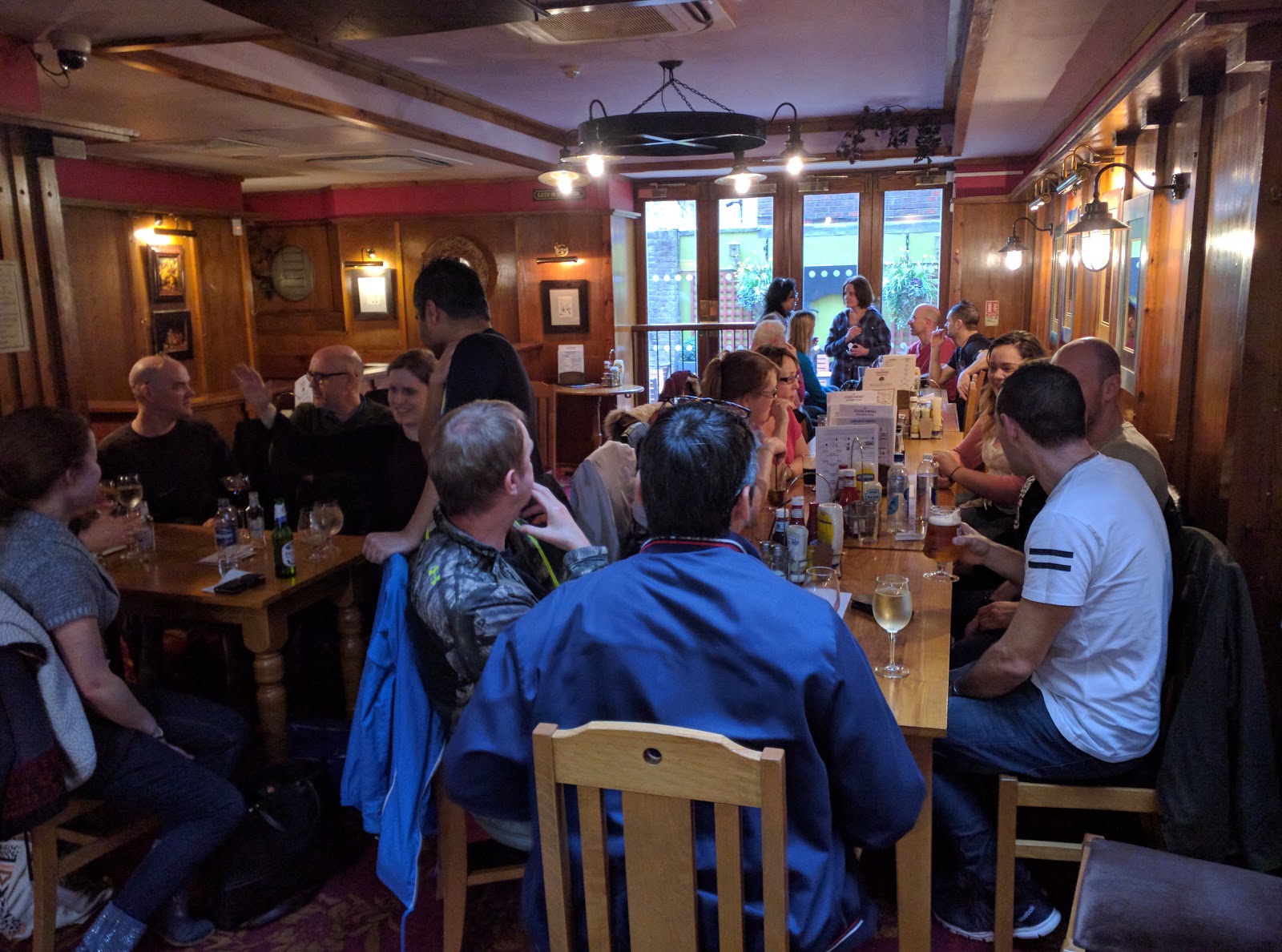
When I was diagnosed I was more or less alone, no one available on the phone due to distance and time differences then, slowly but surely, people came out to support me and show me that I was wrong. Eventually I ended up meeting some of the most compassionate, funny, knowledgeable and amazing people that I know. All of this in just a few years because of T1.
That all very quickly lead on to the #GBDoc on twitter and all of a sudden I don't know how large my support network is when it really comes down to it. Which is how I end up writing this to you poor suckers that are reading it from some reason.... listening to the many great speakers at #TADTalk2017 (and talking with the many wonderful fellow T1's) left me thoughtful and had me finally pluck up the courage to bore you all with my mindless mental meanderings.
I just wonder where it will take me next, either way I know I will have great company.... Like I said before, it's all about perspective and from where I sit I really am very lucky!
For all of you fellow T1's out there, Thank you!
Subscribe to:
Posts (Atom)